The Macro-Biology of No Man’s Land
Category: Behind the Ink / Photography
From the Desk of: Frank De Witte
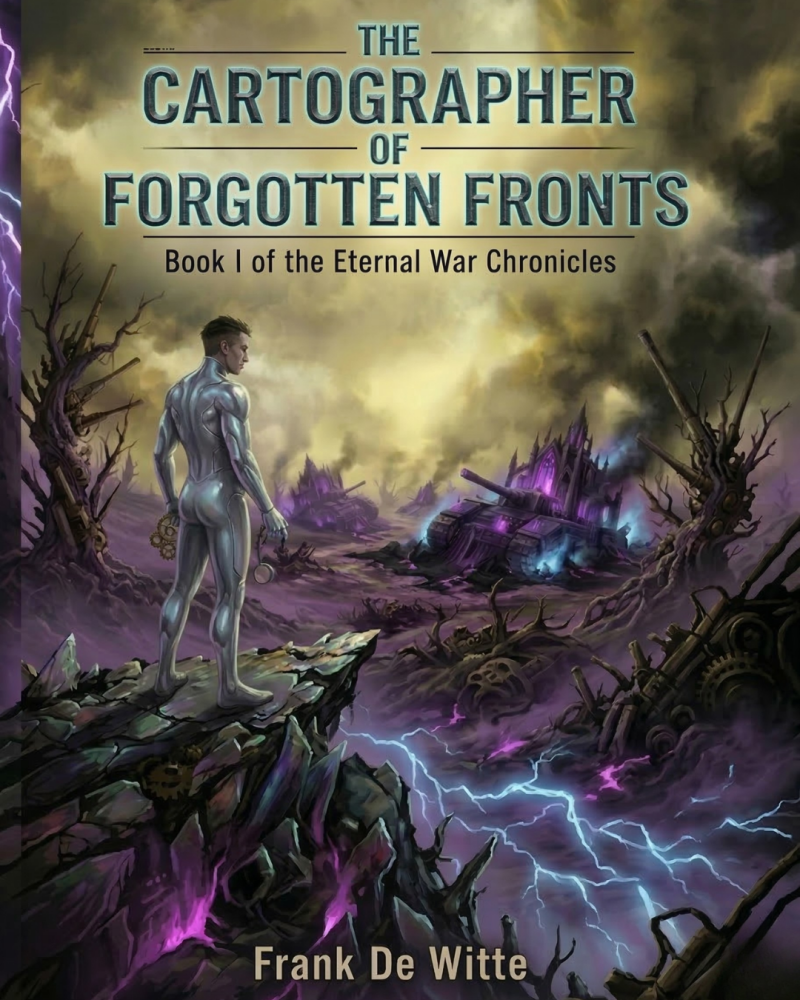
Now that The Cartographer of Forgotten Fronts is in your hands, many of you have asked about the "Orchards" and the strange, aggressive flora that populates the Grey Zone. You’ve asked how I imagined a nature that doesn't just grow, but adapts to chemical fire and industrial rot.
The truth is, I didn't have to imagine it. I just had to look closer around me in my own world where I every day venture.
The Siege in Miniature
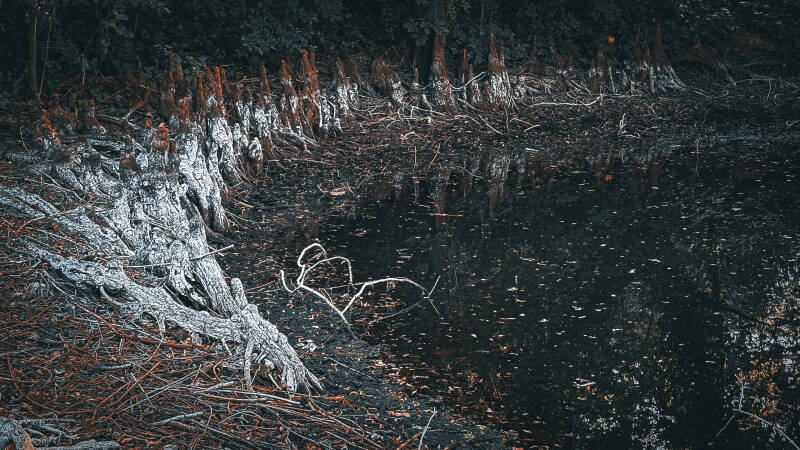
When I am not mapping the borders of the Hind Dominion, I am usually out with my camera, capturing the slow-motion transformations unfolding right beneath our feet. I find my inspiration in the "macro-biology" of our own everyday world. Like the way a fungus grows out of decayed flora, or how morning dew seeping into an asphalt parking lot can freeze, swell, and carve open a miniature canyon over a single winter.
In the book, I describe the "Living Decay." This isn't a metaphor. It is a biological reality I document through my lens.
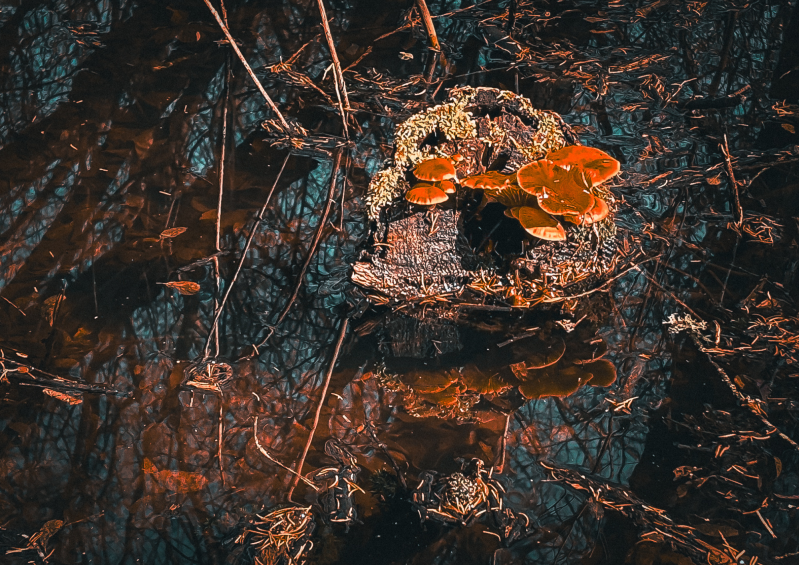
Look at the way the fungus in this frame doesn't just sit on the old tree; it anchors into the oxidation. It feeds on the very thing that is destroying the structure. In the world of Elian Vost, this is the ancestor of the Sector 4 Orchards. I took the persistence of our world's fungi and dialled it up to a "dissonant scream."
Adapting to the Noise
In the Eternal War, nature has had 700 years to adjust to the soot of the Hind’s Land-Crawlers and the purple grease of the Horn’s Bounty. I wanted the plants in No Man’s Land to feel like they’ve earned their place there.
Through my seasonal photography, I’ve watched how nature adjusts its defences.
- Winter: The "Cold-Snap" logic, where plants become as brittle and sharp as the bayonets of the trenches.
- Summer: The "Suffocation" phase, where overgrowth becomes so dense it can stall a steam-engine by sheer mass alone.
When you read about the thorns that can pierce reinforced plating at the Horn, remember that they started as a simple macro observation of a briar patch overtaking a discarded piece of farm machinery in the Danish countryside.
The World is the Protagonist
I’ve always said that the world, not the hero, is the true protagonist of this series. My photography is my way of "interviewing" that protagonist. By looking at the granular details—the texture of rot, the geometry of a crystal, the aggressive curve of a root—I can build a world that feels lived-in, dangerous, and, above all, persistent.
The war may be eternal, but nature is patient. It is simply waiting for us to finish our noise so it can get back to the work of rewriting the map.
The map is now open.
If you haven’t started your journey yet, The Cartographer of Forgotten Fronts is available now.
Explore the Living Decay at www.frankdewitte.com.